Umbraco Multi-Site, Multi-Theme, Multi-Brand Guide
Learn how to build a scalable Umbraco multi-site, multi-theme, multi-brand solution. Explore architecture patterns, content modelling, governance, editor experience, and implementation best practices.
As digital ecosystems grow, businesses often reach a point where one website is no longer enough. A company may need several brand websites, regional sites, campaign microsites, franchise portals, or different user experiences for different audiences. At that stage, the real challenge is not just launching more websites—it is creating a platform that can manage them efficiently, consistently, and sustainably.
Umbraco is a strong choice for this kind of architecture because it allows organisations to manage multiple websites under one shared platform while still supporting brand differences, local content needs, and visual flexibility. When planned properly, Umbraco can power a scalable digital ecosystem where multiple sites share a technical foundation but still feel distinct in their design and messaging.
Why This Matters for Growing Businesses
Many organisations begin with a single website and expand over time. They add a second brand, launch region-specific content, introduce campaign landing pages, or create specialised sites for services, products, or internal audiences. Without a strong platform strategy, this often leads to duplicated development, inconsistent content models, disconnected design systems, and rising maintenance costs.
A well-structured Umbraco solution avoids this problem. Instead of rebuilding the same functionality repeatedly, businesses create a shared platform where content models, components, integrations, and governance rules are reused. This reduces complexity while preserving the flexibility each website needs.
This model is particularly valuable for corporate groups, franchise businesses, education providers, regional organisations, and companies managing multiple digital products or service brands.


Why Businesses Move to a Multi-Site Umbraco Model
As organisations grow, their websites often multiply faster than their digital strategy. New brands, regional offices, campaign sites, and service-specific experiences create pressure on content teams and developers. A shared Umbraco platform helps reduce duplication by reusing components, content structures, and governance rules while still allowing each website to support its own audience, goals, and identity.
Understanding Multi-Site, Multi-Theme, and Multi-Brand
These three concepts are closely related but distinct:
Multi-site means one platform manages several different websites. These sites may have their own domains, content trees, navigation, and business goals.
Multi-theme means the same shared platform or component library can present different visual styles. This includes differences in colour palettes, typography, spacing, buttons, cards, and other design elements.
Multi-brand means the platform supports different brand identities. This includes different logos, tone of voice, imagery styles, messaging, contact details, navigation structures, and legal content.
The most scalable solutions treat these as separate layers. The site defines the website boundary, the brand defines the identity, and the theme defines the visual expression.
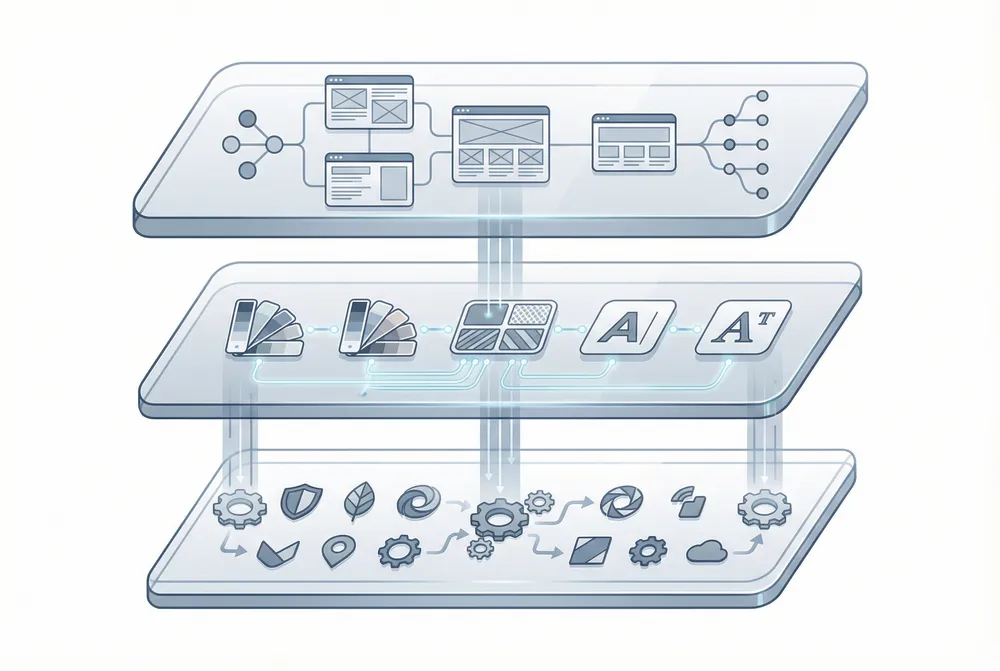
Multi-Site, Multi-Theme, and Multi-Brand Are Not the Same
A strong Umbraco architecture separates structure from styling and styling from brand identity. Multi-site is about website ownership and content boundaries. Multi-theme is about visual flexibility across shared components. Multi-brand is about identity, messaging, and user perception. When these layers are clearly separated, the platform becomes far easier to scale, manage, and evolve over time.
Why Umbraco Is Well Suited to This Architecture
Umbraco gives developers the flexibility to model content properly, create reusable structures, and organise multiple sites within one project. At the same time, it provides content editors with a practical backoffice experience structured around clear ownership boundaries.
This makes Umbraco a strong option for businesses that want to centralise governance and technology without forcing every site or brand into the same experience. Shared document types, reusable blocks, and common integrations sit at platform level, while site-specific settings and brand-specific styling are managed locally.
This balance is where Umbraco becomes especially valuable—it supports consistency where consistency matters, and flexibility where flexibility matters.

Recommended Architecture Approach
For most organisations, the most practical solution is a shared Umbraco platform with clearly defined separation between platform-wide assets and site-specific configuration.
A strong multi-site architecture typically includes:
- shared content models
- shared page components
- individual root nodes for each website
- local settings per site
- brand identity settings
- theme configuration settings
- reusable global content where needed
This allows the business to maintain one platform while giving each site control over its own logo, colour palette, navigation, footer details, metadata defaults, and supporting content.
A clean structure makes it faster to launch new sites in the future. Instead of building from scratch, teams reuse proven building blocks and apply a new brand or theme layer.
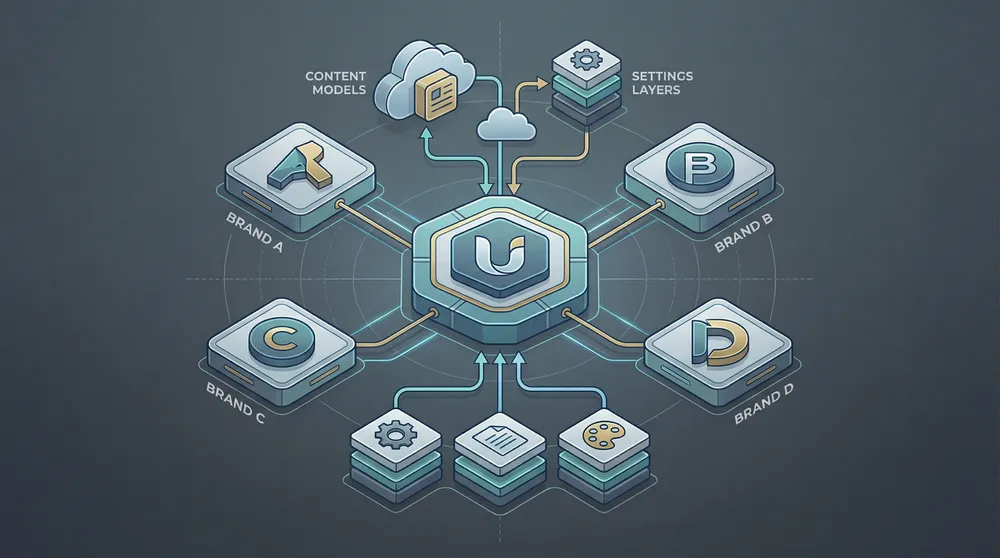
Recommended Architecture for a Shared Umbraco Platform
The best multi-site Umbraco solutions are designed as one shared platform with clear boundaries. Shared functionality such as reusable components, SEO foundations, forms, integrations, and accessibility rules should live at platform level. Each site or brand then controls its own identity through local settings such as brand assets, navigation, theme tokens, contact details, and content ownership. This reduces development cost while keeping the platform scalable.
Content Modelling Is the Foundation
Content modelling plays one of the biggest roles in long-term success. If the content structure is not properly designed from the beginning, even a technically strong platform becomes difficult to manage.
The goal is to create reusable document types and compositions that support consistency without becoming restrictive. Shared features like SEO metadata, hero sections, banners, cards, call-to-actions, and reusable content blocks should be structured to work across multiple sites. At the same time, site-specific content should stay within clear boundaries so editors know what they own and what should not be changed globally.
A good content model helps answer important questions early:
- what is shared across every site
- what belongs only to one brand
- what should be editable per website
- what should remain centrally controlled
- what should be reused as a component rather than recreated manually
When these rules are defined properly, the platform becomes easier to scale and govern.
How to Handle Theming Without Duplicating Everything
One of the most common mistakes in multi-brand projects is creating separate versions of the same component for every brand. This may seem convenient initially, but it quickly creates maintenance problems.
A better approach is to build a shared design system and apply theming through configurable design tokens. The structure of a component stays the same, but the presentation changes based on the current site or brand.
This theme layer can control:
- colours
- typography
- button styles
- border radius
- shadows
- iconography
- card appearance
- imagery treatments
- background surfaces
The result is a more scalable and maintainable solution. One hero component can look premium for one brand, clean and minimal for another, and campaign-driven for a third—without maintaining three separate code paths.

Use Shared Components and Theme Tokens
A flexible theme system makes it possible to reuse the same components across multiple websites without copying templates for every brand. Instead of changing structure, the platform changes presentation through theme tokens such as colours, typography, spacing, shadows, and button styles. This keeps the codebase cleaner, improves maintainability, and allows new brands to be introduced faster.
Supporting Multiple Brands Without Losing Control
A successful multi-brand solution requires more than visual flexibility—it needs clear governance around what is shared and what is owned by each brand.
The following elements should typically be shared across the platform:
- core page models
- reusable content blocks
- accessibility standards
- performance rules
- analytics foundations
- security controls
- technical SEO structure
At the same time, each brand should control its own identity and expression, including:
- logo and visual identity
- colour palette
- tone of voice
- campaign messaging
- regional contact details
- site-specific navigation
- legal disclaimers where needed
This balance helps the organisation stay efficient without flattening every brand into the same experience.


Governance Matters as Much as Architecture
A multi-brand Umbraco platform should feel organised for editors, not overwhelming. Content trees should be clearly separated, shared content should be labelled, and user roles should prevent accidental cross-brand changes. Most editors should only see the site areas relevant to them, while a central digital team manages the shared structures that protect consistency across the wider ecosystem.
SEO and Performance Across Multiple Sites
Multi-site architecture must be planned with SEO and performance in mind. Without clear structure, issues such as duplicate content, incorrect canonical handling, weak metadata defaults, or inconsistent robots rules can appear quickly.
Each site should have its own:
- domain strategy
- metadata defaults
- canonical rules
- sitemap setup
- robots handling per environment
- structured data where needed
- hreflang or regional targeting if relevant
Performance is equally critical. A shared platform should not allow one poorly managed site to slow down the entire ecosystem. Caching, media management, image optimisation, CDN strategy, and infrastructure planning must be considered from the beginning.

When a Shared Platform Is the Right Choice
A shared Umbraco installation is typically the best fit when:
- Multiple sites have overlapping functionality and content models
- The organisation benefits from one codebase and deployment process
- The goal is to centralise governance and reduce duplicated effort
- Teams want to accelerate the launch of new websites
However, separate installations may be better when brands require very different functionality, when security boundaries must be stricter, or when release cycles and integrations are too different to comfortably share one platform.
The key question is not whether multi-site is possible—it is whether reuse brings more value than complexity.
Key Takeaways
A successful Umbraco multi-site, multi-theme, and multi-brand solution is not just about managing more websites—it is about designing a digital platform that can grow without becoming fragmented.
The strongest implementations create a shared technical foundation while allowing each site and brand the freedom to communicate effectively with its audience. Content architecture, theme strategy, governance, SEO, editor permissions, and long-term scalability must all work together.
When planned well, Umbraco becomes more than a CMS—it becomes the operational core of a scalable digital ecosystem that adapts to changing business needs while maintaining consistency and quality across all touchpoints.
Planning a multi-site or multi-brand Umbraco platform?
Vanitech helps businesses design and implement scalable Umbraco solutions with shared architecture, flexible theming, robust governance, and future-ready implementation. Let's discuss your requirements.
Frequently Asked Questions
Answers to the most common questions about Umbraco multi-site, multi-theme, and multi-brand architectures