Content Operations Automation Strategy
A practical content operations automation strategy for Australian businesses covering AI-assisted workflows, CMS governance, approvals, source checks, repurposing, measurement, and content quality.
The content strategy trend in 2026 is not "publish more with AI." It is "operate better with AI." Marketing teams are expected to produce more, adapt content for AI search, personalise by audience, repurpose across channels, and prove ROI. Automation can help, but only if the workflow protects quality, evidence, brand voice, and approvals.
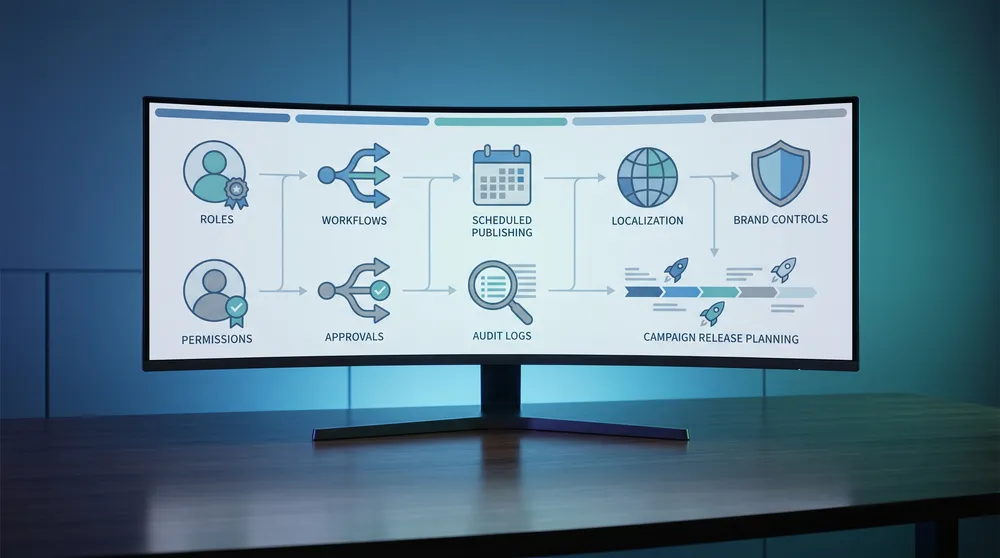
Content operations automation connects the CMS, SEO tools, analytics, CRM, sales questions, subject-matter experts, design assets, social channels, email, and approval workflow. AI then supports specific tasks: clustering questions, drafting outlines, summarising sources, suggesting metadata, checking stale claims, converting articles into channel-specific briefs, and preparing review checklists.
For VaniTech's audience, this is the strongest content angle because it links automation, integration, AI search, and practical CMS governance into one business problem: how to turn expertise into maintained, discoverable content without creating a low-quality content machine.
What to Automate in Content Operations
Automate support tasks around expert content. Keep strategy, judgement, source approval, and final publishing accountable to people.
Question Capture
Pull recurring questions from sales calls, forms, support tickets, search data, CRM notes, and customer conversations.
Content Briefs
Generate structured briefs with intent, audience, outline, internal links, source requirements, FAQs, and conversion goal.
Source Checks
Track inspected URLs, publication dates, claims, limitations, and which claims need expert review before publishing.
CMS Metadata
Suggest titles, descriptions, schema fields, image alt text, categories, and redirects for editorial review.
Repurposing
Turn approved articles into email, LinkedIn, short-form video scripts, sales enablement notes, and FAQ snippets.
Refresh Alerts
Flag pages with declining traffic, stale claims, broken links, outdated screenshots, thin FAQs, or changed search intent.
Why Content Automation Needs Governance
HubSpot's 2026 State of Marketing report says core channels such as social media, email, websites, and blog content still matter, but the rules have changed. It identifies AI-personalised content, automation, brand-values content, SEO updates for search changes, and repurposing as top trends. It also notes that marketers are using AI widely across content creation, media creation, ad optimisation, admin automation, learning, ideation, and strategic planning.
That creates a content quality problem. If every team can generate more content, volume stops being a differentiator. Google's helpful content guidance points teams back to original information, substantial value, expertise, trust, people-first purpose, and care in production. Content Marketing Institute's 2026 B2B research makes a similar point: higher-performing teams are investing in fundamentals such as thought leadership, first-party data, governance, and strategic differentiation rather than only producing more AI-assisted material.
The practical conclusion is direct: automate the workflow, not the accountability. AI can help prepare content, but the business still needs ownership, source standards, expert review, accessibility checks, brand judgement, and performance measurement.
Build the Content Operations Map
Start by documenting how content moves from idea to improvement after publication. A useful map includes intake, prioritisation, research, expert input, drafting, review, CMS entry, technical SEO, visual assets, approval, publication, distribution, measurement, and refresh.
Most content teams have hidden manual work between those steps. Ideas sit in chats. Source links live in personal notes. Subject-matter experts give feedback in email. Metadata is added late. Internal links are forgotten. Social posts are recreated from scratch. Old pages are refreshed only when traffic drops. Automation should remove that friction.
| Stage | Automation can help with | Human should own |
|---|---|---|
| Intake | Collect questions from forms, CRM, support, sales notes, and search data. | Choosing which questions are commercially important. |
| Research | Summarise inspected sources and identify claims that need evidence. | Approving source quality and interpreting limitations. |
| Drafting | Prepare outlines, examples, FAQs, metadata, and first-pass structure. | Expert insight, originality, positioning, and final wording. |
| CMS | Suggest fields, internal links, schema, image alt text, and redirects. | Publishing approval, accessibility, and technical QA. |
| Distribution | Generate channel-specific variants for email, LinkedIn, ads, and sales enablement. | Channel strategy, offer, timing, and brand judgement. |
| Refresh | Flag stale claims, performance drops, broken links, duplicate intent, and content gaps. | Deciding whether to update, consolidate, redirect, or retire. |
Design for AI Search Without Chasing Myths
Google's AI features guidance says there are no special technical requirements to appear in AI Overviews or AI Mode beyond eligibility for Google Search and snippets. It also recommends the same foundations: allow crawling, make content findable through internal links, provide a good page experience, ensure important content is textual, use high-quality images or videos where useful, and make structured data match visible content.
For content operations, that means teams should automate checks that support those fundamentals: crawlability, titles, descriptions, internal links, visible FAQs, source links, structured fields, page update history, and image alt text. Do not automate fake freshness or low-value rewrites. Refresh content when the answer, evidence, offer, regulation, tool behaviour, pricing, or customer question has genuinely changed.
Repurposing Is Not Copy and Paste
HubSpot's report identifies repurposing content across channels as a major trend, while noting that channel-specific tailoring matters. A blog post can become an email, LinkedIn carousel, sales one-pager, webinar outline, short video script, or FAQ block, but each version should be adapted to the audience and behaviour of that channel.
Automation can prepare variants quickly. The quality gate is whether the output fits the channel and preserves the approved claim. A LinkedIn post may lead with a practical tension. An email may focus on one decision. A sales note may include objections and discovery questions. A video script may need a concrete example. A FAQ may need a direct answer with a source-backed limitation.
Measurement for Content Operations
Measure the workflow and the business result. Operational metrics include cycle time, review time, content backlog, source completeness, approval bottlenecks, refresh volume, and reuse rate. Performance metrics include Search Console impressions and clicks, assisted conversions, qualified enquiries, CRM source quality, sales usage, newsletter engagement, social engagement, and rankings for priority questions.
The goal is not to prove that AI wrote faster copy. The goal is to prove that the content system captures better questions, publishes more useful answers, updates them reliably, and helps the business win higher-intent enquiries.
Sources Checked
Content Operations Automation FAQs
Practical answers for marketing teams introducing AI and automation into content workflows.
Build a Content Workflow That Can Scale
VaniTech can help connect your CMS, analytics, CRM, content process, AI workflow, and publishing governance into a practical operating model.